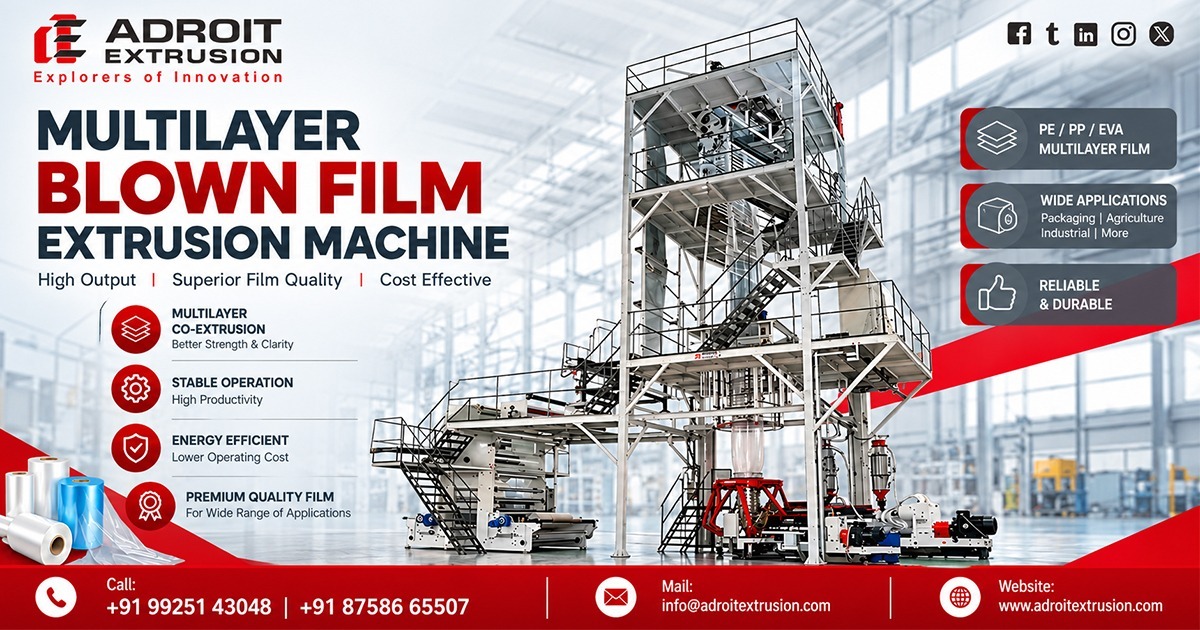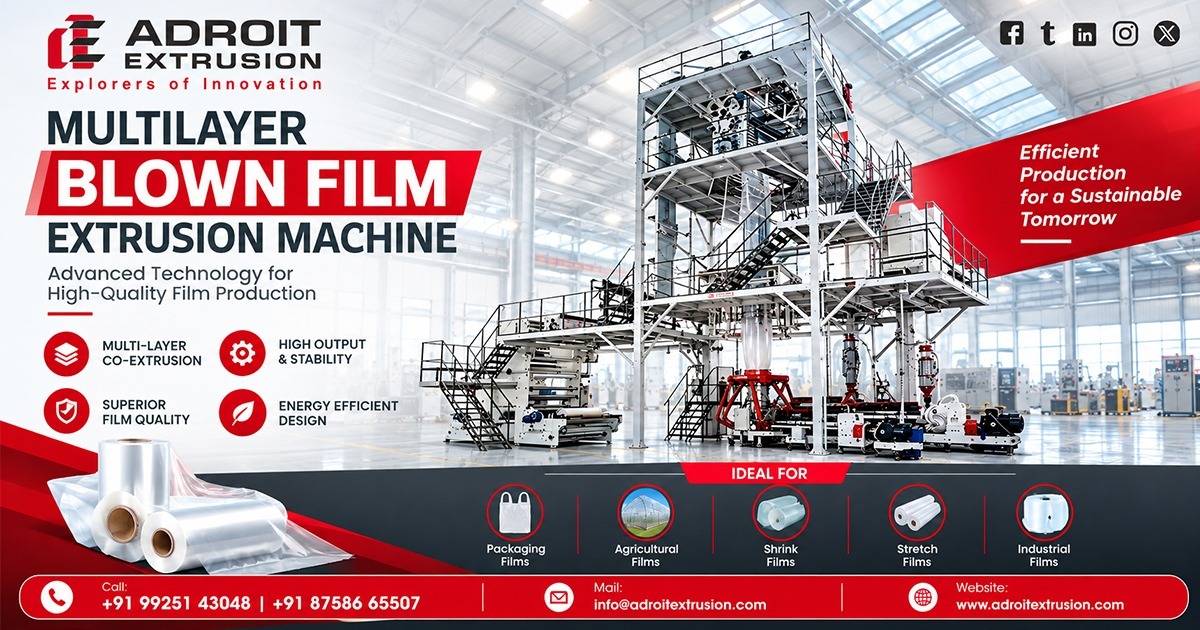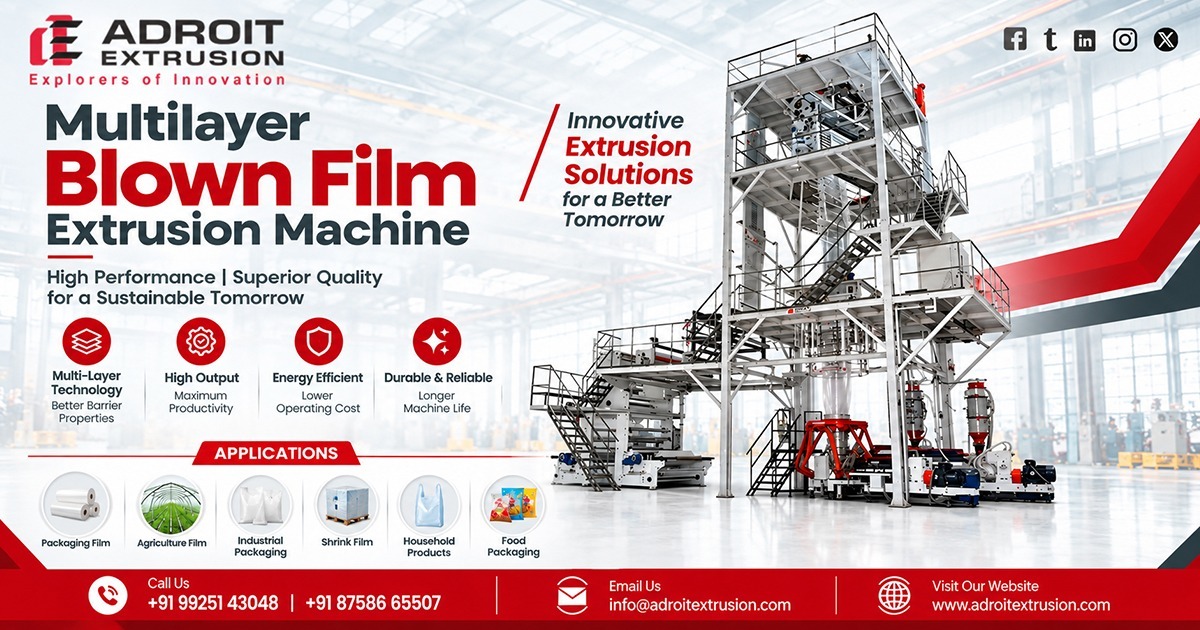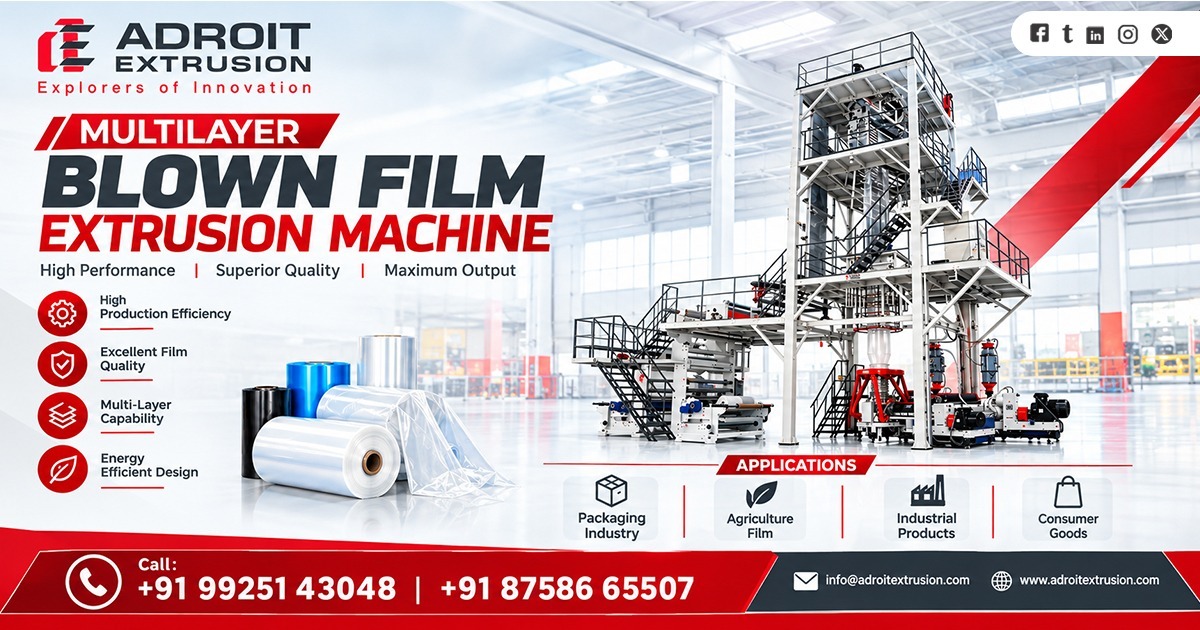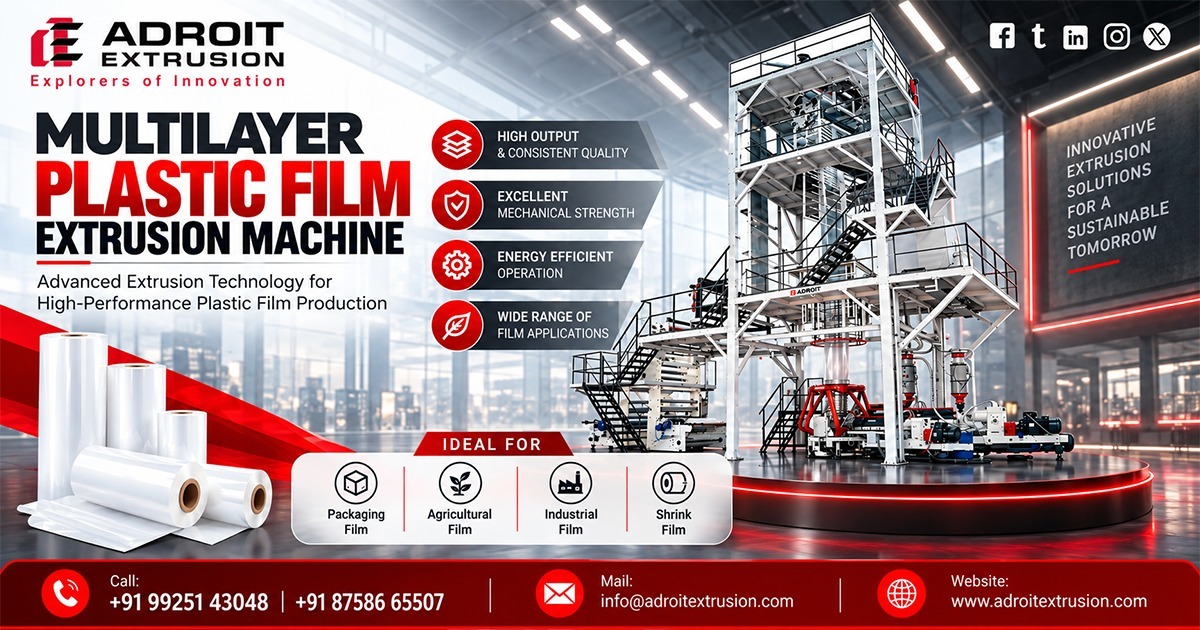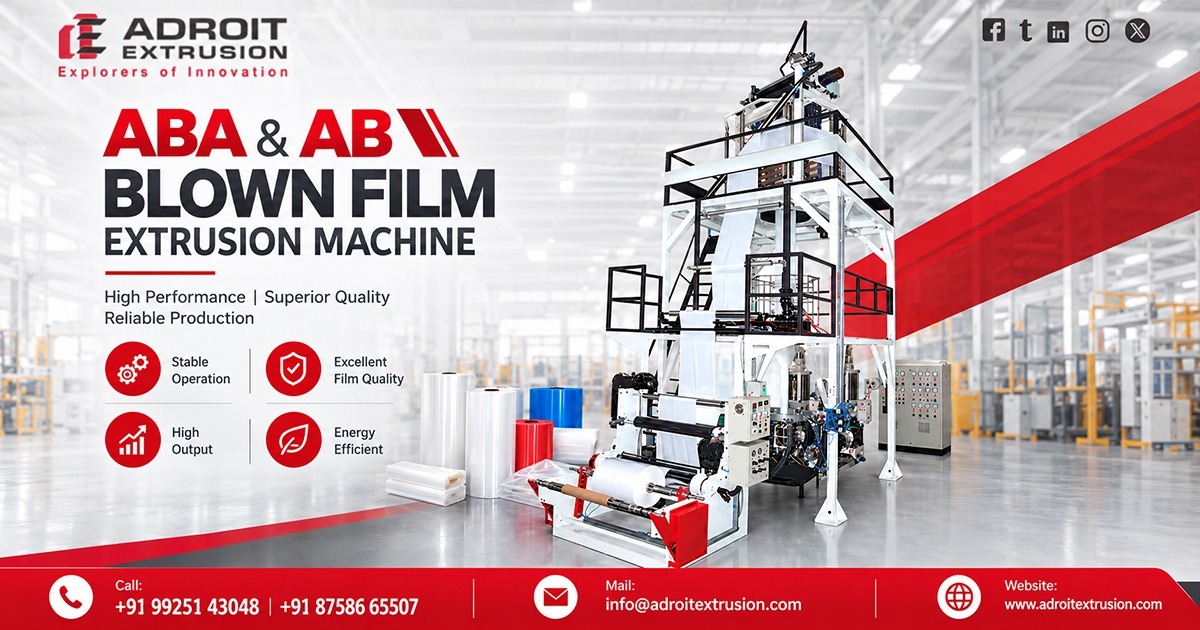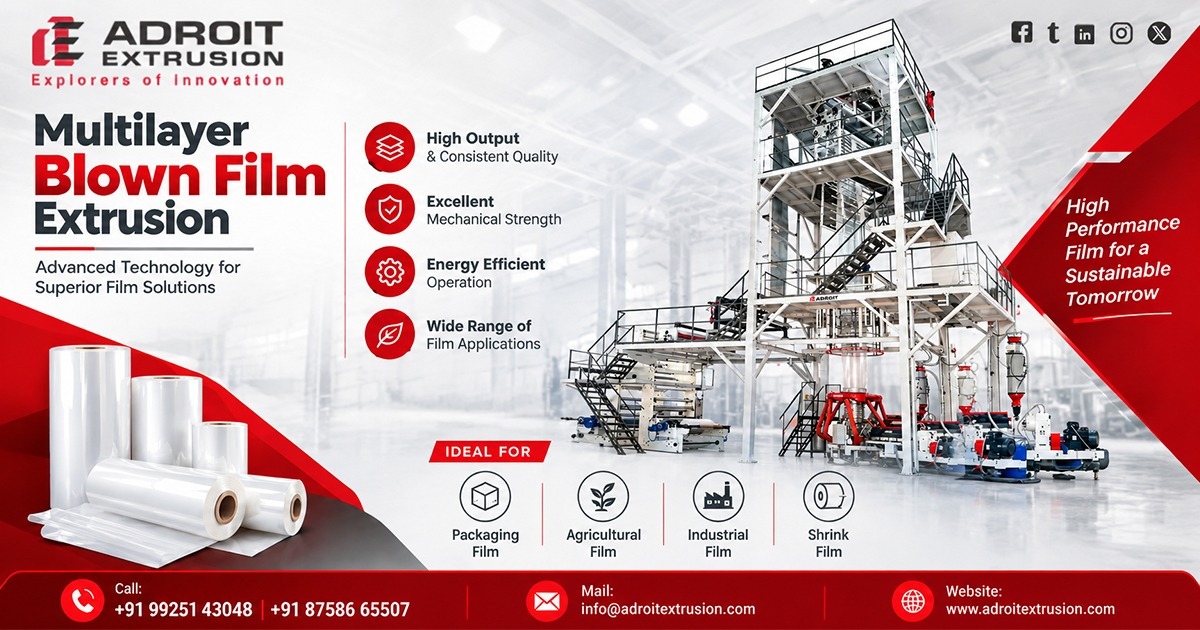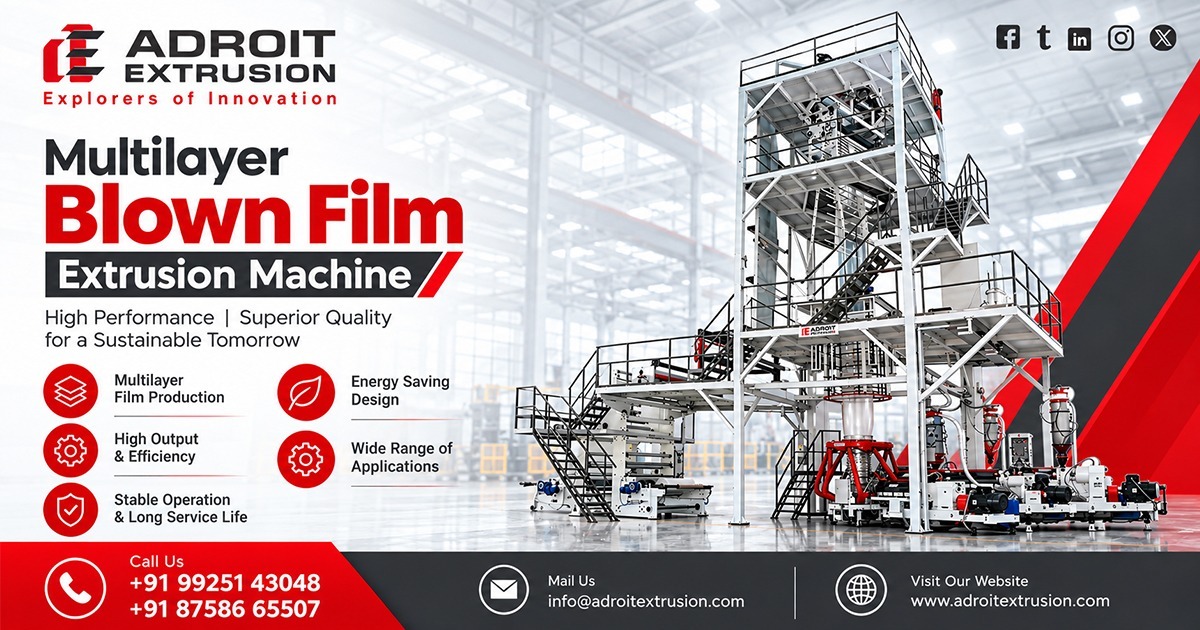
Choosing the right Multilayer Blown Film Extrusion Machine depends on your packaging material, film structure, production capacity, layer requirements, raw materials, and end-use application.
A suitable extrusion line should deliver consistent film quality, efficient material utilization, stable output, and flexibility for future production needs.
For packaging manufacturers, Adroit Extrusion provides multilayer blown film extrusion solutions designed to support demanding film production requirements.
The right machine configuration can help manufacturers produce functional films while maintaining thickness control, mechanical strength, sealing performance, and production efficiency.
What Is a Multilayer Blown Film Extrusion Machine?
A Multilayer Blown Film Extrusion Machine produces plastic films by combining two or more polymer layers through separate extruders and a multilayer die.
Each layer can perform a specific function, such as:
- Strength and mechanical protection
- Heat sealing
- Moisture or oxygen barrier
- Printing compatibility
- Surface appearance
- Adhesion between different materials
- Cost optimization through functional layer distribution
This makes multilayer extrusion suitable for packaging applications where a single polymer cannot provide all required properties.
How to Choose the Right Multilayer Blown Film Extrusion Machine?
1. Identify Your Packaging Application
Start by defining what type of packaging film you want to manufacture.
Common applications include:
- Food packaging films
- Flexible packaging
- Agricultural films
- Industrial packaging
- Shopping and carry bags
- Lamination films
- Heavy-duty packaging
- Shrink films
- Hygiene and specialty films
Your application determines the required film properties and machine configuration.
2. Select the Appropriate Number of Layers
The number of layers directly influences the functionality and complexity of the film.
Common configurations include:
- 3-layer blown film extrusion: Suitable for general-purpose packaging and applications requiring basic material combinations.
- 5-layer blown film extrusion: Suitable when manufacturers need improved barrier properties, strength, sealing, or material optimization.
- 7-layer blown film extrusion: Suitable for advanced packaging structures requiring multiple functional layers and precise material distribution.
Choose the layer configuration based on the required film structure rather than simply selecting the highest number of layers.
3. Match the Machine With Your Raw Materials
Different packaging businesses process different polymers. Your extrusion machine should be compatible with the materials required for your film structure.
Depending on the application, materials may include:
- LDPE
- LLDPE
- HDPE
- mLLDPE
- EVA
- Recycled polymers
- Barrier polymers
- Other compatible polymer blends
Material compatibility affects processing temperature, output stability, layer adhesion, film strength, and final product quality.
4. Consider Required Film Width
Determine the maximum and minimum film width required for your customers and products.
Consider:
- Required layflat width
- Tube diameter
- Film thickness
- Number of lanes or bags
- Product dimensions
- Future production requirements
Selecting a machine with an appropriate width range helps avoid unnecessary investment while maintaining flexibility for future orders.
5. Evaluate Film Thickness Requirements
Different packaging products require different film thicknesses.
Before selecting a machine, identify:
- Minimum film thickness
- Maximum film thickness
- Thickness tolerance
- Required uniformity
- Production speed at different thicknesses
A suitable multilayer blown film machine should maintain stable thickness and bubble control across the required production range.
6. Check Required Production Capacity
Production capacity should match your current demand and planned business growth.
Evaluate:
- Kilograms per hour
- Film width
- Film thickness
- Production speed
- Extruder output
- Expected operating hours
- Number of production shifts
Avoid choosing a machine only because it offers higher output. The ideal machine should provide commercially useful output with stable quality and efficient energy and material utilization.
7. Consider Barrier Film Requirements
If your business serves food, pharmaceutical, hygiene, or other sensitive packaging markets, barrier performance may become a major selection factor.
Multilayer construction can combine different materials to improve:
- Oxygen resistance
- Moisture resistance
- Aroma retention
- Product protection
- Shelf-life performance
- Sealing characteristics
Discuss the required barrier structure with the machine manufacturer before finalizing the extrusion line.
8. Evaluate Automation and Process Control
Modern packaging production requires consistent operation and repeatable film quality.
Depending on your production requirements, consider features such as:
- Automatic thickness control
- Temperature control
- Automatic dosing
- Digital process monitoring
- Automatic winding
- Bubble control systems
- Recipe management
- Production data monitoring
Higher automation can reduce operator dependency and improve production consistency.
9. Consider Energy Efficiency
Energy consumption directly affects operating costs.
When comparing machines, evaluate:
- Extruder motor efficiency
- Heating system efficiency
- Cooling requirements
- Air-ring performance
- Drive system
- Overall power consumption per kilogram
A machine with efficient processing can support better long-term production economics.
10. Check Machine Configuration and Future Expansion
Your packaging business may expand into new film structures later. Therefore, consider whether the extrusion line can accommodate future requirements.
Look at:
- Additional layer capabilities
- Extruder capacity
- Material flexibility
- Film width range
- Thickness range
- Automation upgrades
- Downstream equipment compatibility
Frequently Asked Questions
Q1: What is a multilayer blown film extrusion machine?
A multilayer blown film extrusion machine combines multiple polymer layers into a single blown film structure for improved functional performance.
Q2: How many layers are suitable for packaging film?
Three, five, or seven layers may be suitable depending on the required strength, sealing, barrier, and material combination.
Q3: Which polymers can be used in multilayer blown film extrusion?
Common materials include LDPE, LLDPE, HDPE, mLLDPE, EVA, recycled polymers, and other compatible packaging polymers.
Q4: Is a 5-layer machine better than a 3-layer machine?
Not always. A 5-layer machine is preferable when the packaging structure requires additional functional or barrier layers.
Q5: How do I calculate the required extrusion capacity?
Consider film width, thickness, production speed, operating hours, product demand, and expected future production requirements.
Q6: What should I provide before buying a multilayer blown film machine?
Provide your film application, layer structure, materials, width, thickness, output, quality requirements, and automation expectations.
Choose the Right Multilayer Blown Film Extrusion Machine
Discuss your packaging requirements with Adroit Extrusion and choose the right multilayer blown film machine for production growth.
Website: www.adroitextrusion.com
Email: info@adroitextrusion.com
Phone: 09925143048 | 08758665507
View Product: Click here