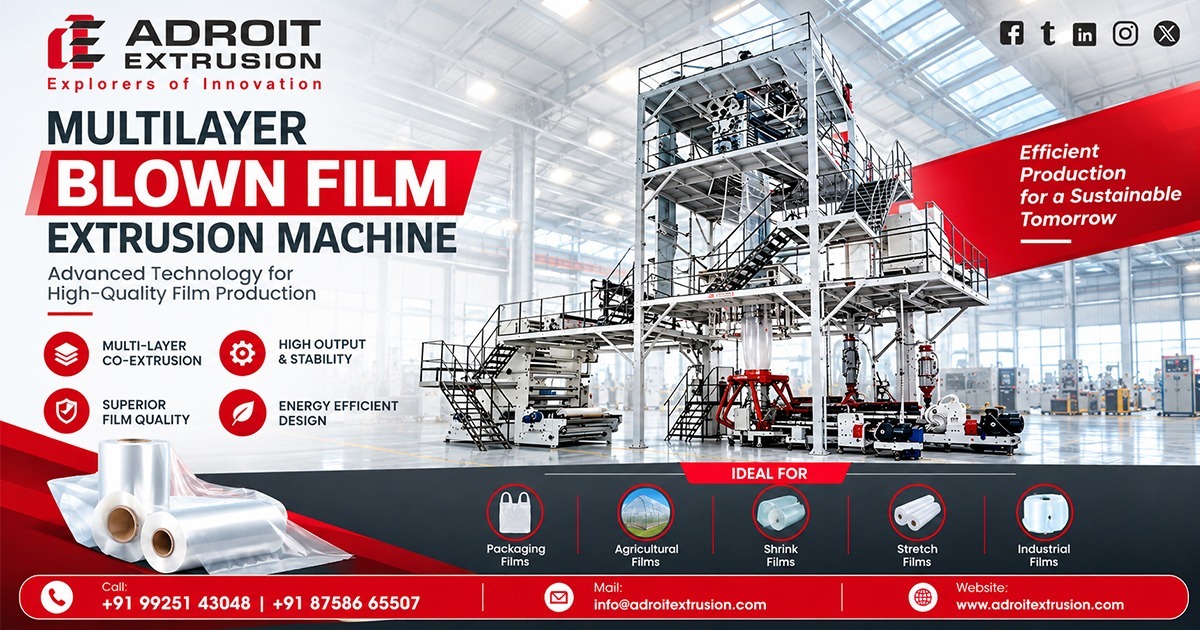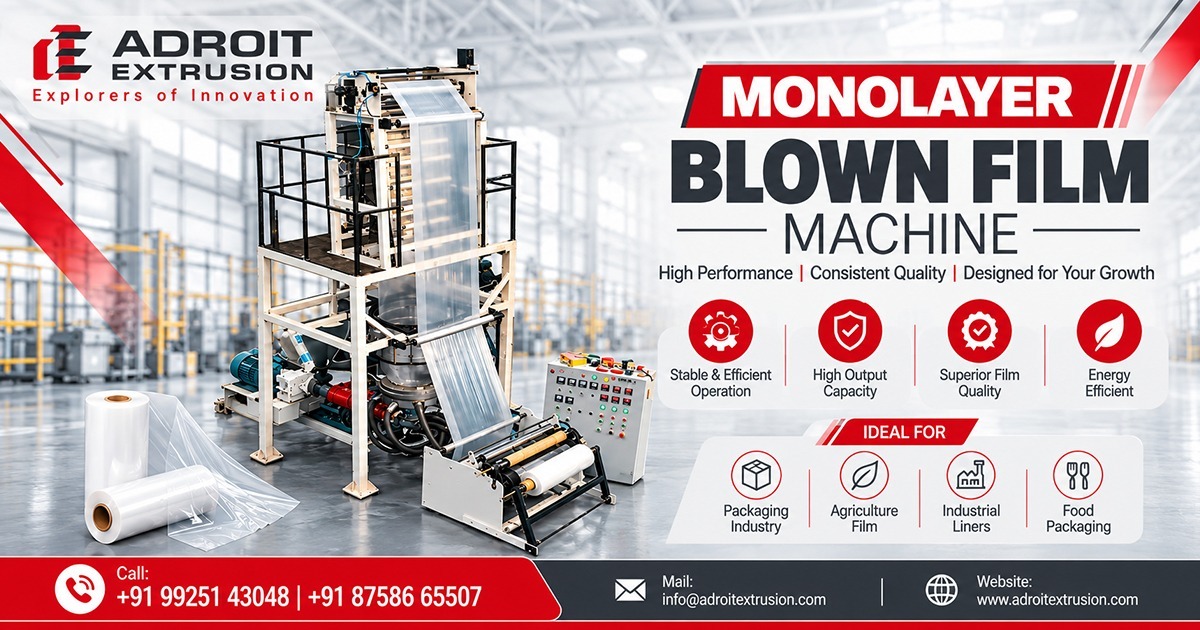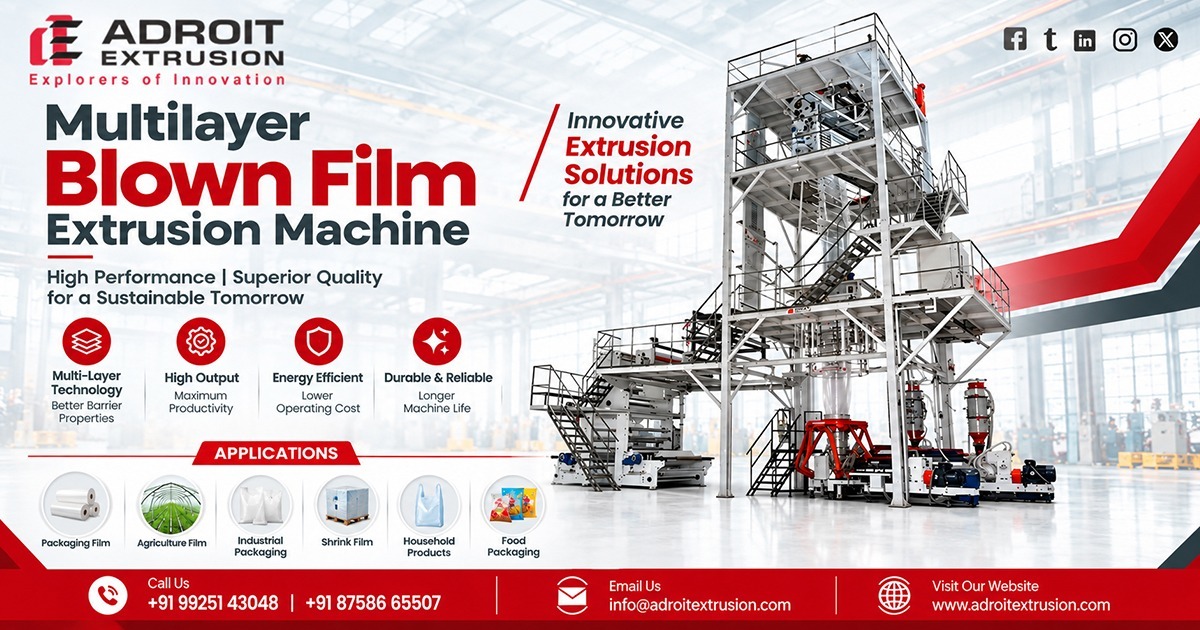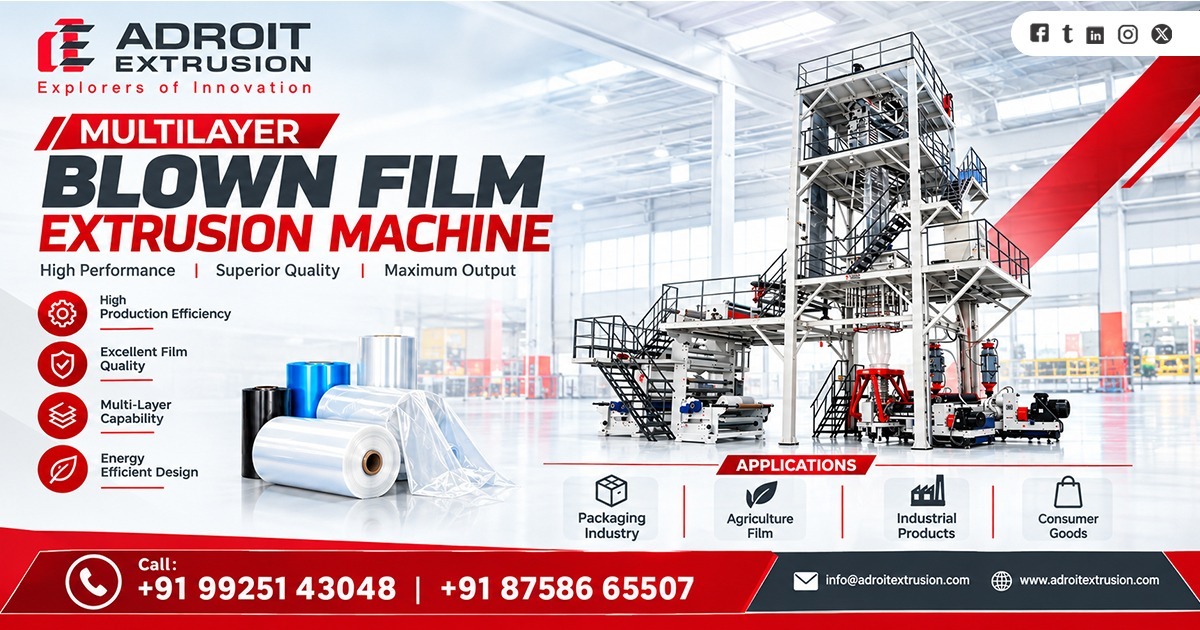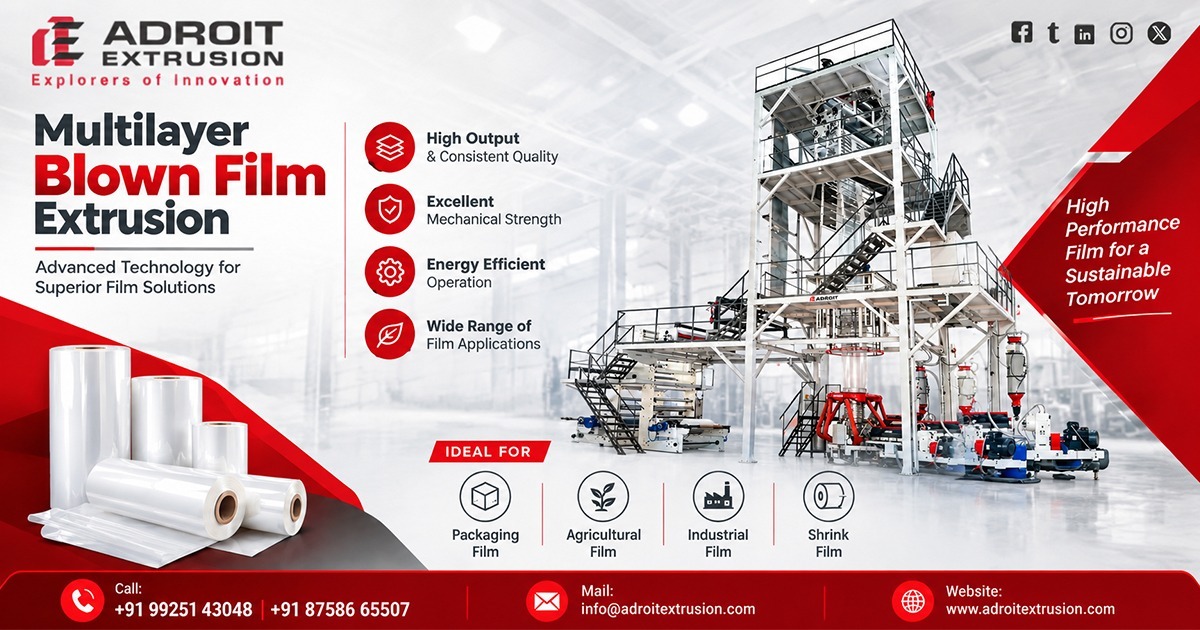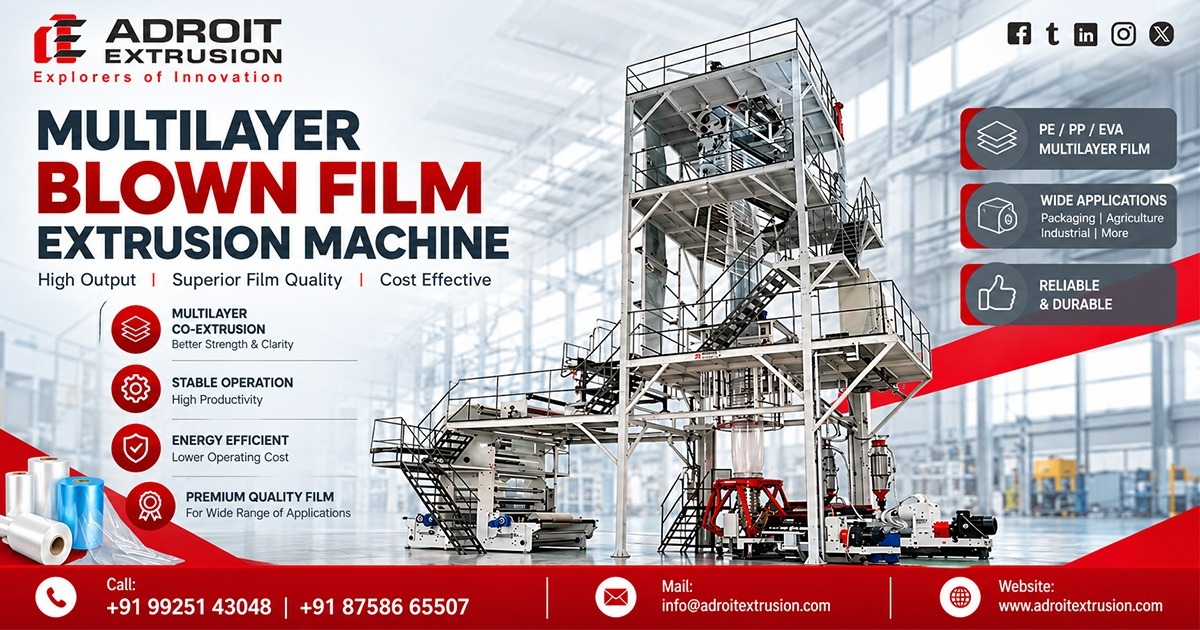
Blown film extrusion is a continuous manufacturing process that converts plastic granules into thin, flexible film.
An extruder melts the polymer, a circular die forms it into a tube, and internal air inflates the tube into a bubble. The film then cools, passes through flattening rollers and winds onto rolls.
For packaging manufacturers exploring blown film extrusion machines from Adroit Extrusion, understanding each production stage helps define requirements for film thickness, width, material selection and output.
Step-by-Step Blown Film Extrusion Manufacturing Process
1. Raw Material Selection and Mixing
The process begins with selecting a polymer formulation suitable for the finished packaging application.
- LDPE: Commonly selected for flexibility and processing ease.
- LLDPE: Used in blends to improve toughness and puncture resistance.
- HDPE: Suitable for applications requiring greater stiffness.
- Masterbatches and additives: Introduce colour or properties such as slip, antiblocking and UV resistance.
Operators measure and mix the ingredients according to the production recipe. Material compatibility and consistent dosing help maintain repeatable film quality.
2. Feeding Plastic Granules into the Extruder
A hopper supplies the prepared material to the extruder barrel.
- Granules enter the rotating screw.
- The screw conveys the material through successive barrel zones.
- Controlled feeding helps maintain a steady melt supply.
- Suitable material handling reduces contamination and recipe variation.
3. Melting and Mixing the Polymer
Barrel heaters and mechanical shear from the rotating screw melt the plastic.
- Controlled temperature zones support gradual melting.
- The screw mixes the polymer and additives.
- Melt pressure moves the material towards the die.
- Correct settings help prevent unmelted particles and thermal degradation.
Processing temperatures depend on the resin grade, formulation and equipment design.
4. Forming a Tube Through the Circular Die
The molten polymer flows through an annular die, which shapes it into a continuous tube.
- The die distributes the melt around a circular opening.
- Consistent melt flow supports uniform film formation.
- Die condition and temperature balance influence film quality.
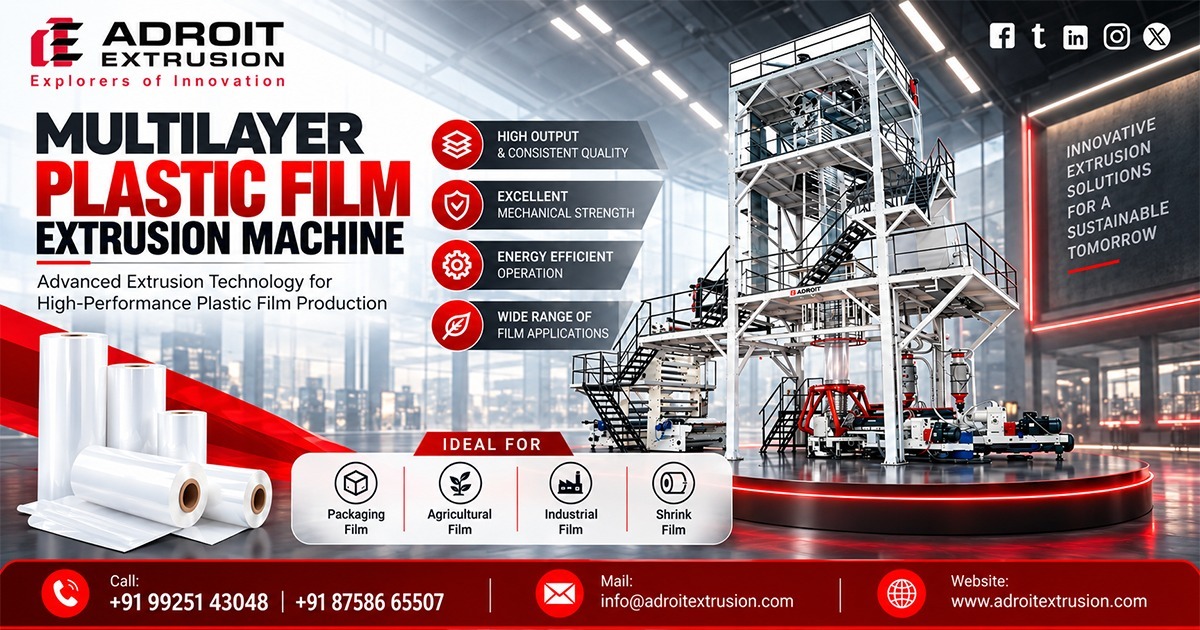
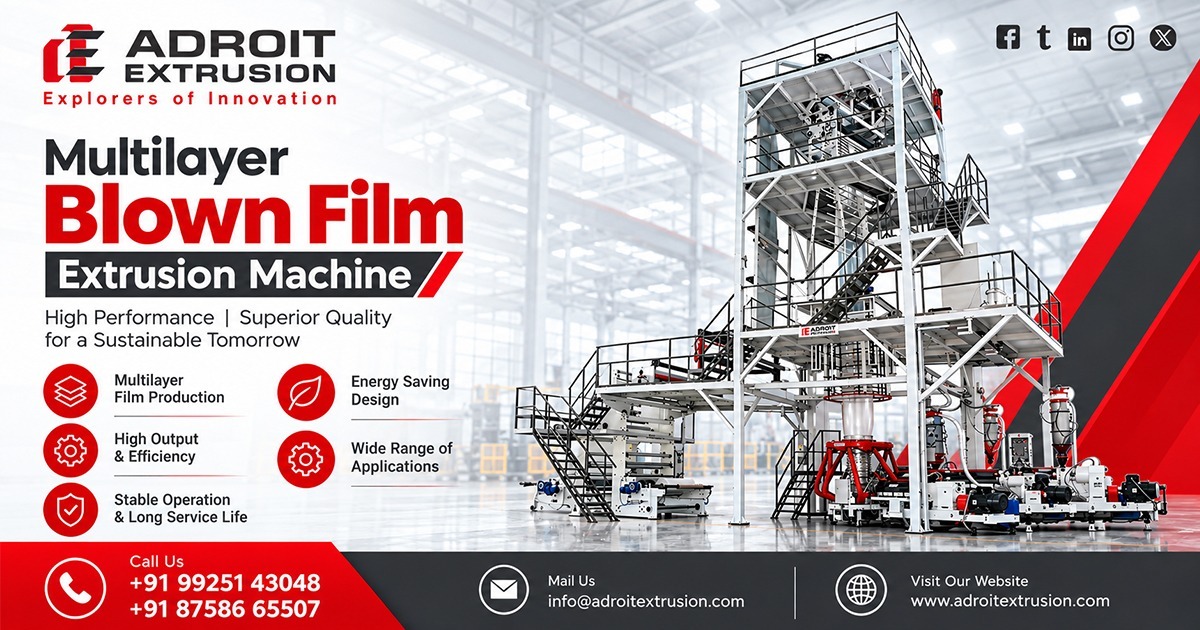
On a multilayer co-extrusion line, separate extruders supply melt streams that combine into a layered tube. This allows manufacturers to distribute different material properties across the film structure.
5. Inflating the Film Bubble
Air introduced inside the molten tube expands it into a bubble, while the haul-off system draws it upwards.
- Inflation stretches the film across its width.
- Upward drawing stretches it along the production direction.
- Bubble diameter influences the finished layflat width.
- Extrusion output, bubble size and haul-off speed together influence thickness.
The blow-up ratio compares bubble diameter with die diameter and helps describe the degree of transverse stretching.
6. Cooling and Solidifying the Film
An external air ring directs cooling air around the emerging tube. The bubble cools and solidifies as it rises towards the collapsing frame.
- Balanced airflow supports bubble stability.
- Controlled cooling helps maintain consistent film formation.
- Some lines also use internal bubble cooling.
- Cooling conditions influence clarity, output and physical properties.
7. Collapsing the Bubble and Passing Through Nip Rollers
A collapsing frame gradually converts the inflated bubble into a flat tube.
- Guides bring the sides of the bubble together.
- Nip rollers pull the film through the line.
- The nip helps retain air inside the bubble.
- Correct alignment helps reduce wrinkles and uneven tracking.
The resulting material is called layflat tubing.
8. Optional Treatment, Slitting and Winding
The film passes through finishing equipment according to the intended application.
- Corona treatment: Improves surface wettability for suitable printing or lamination processes.
- Gusseting: Creates side folds where required.
- Slitting: Converts tubing into sheets or narrower webs.
- Winding: Collects the film under controlled tension for storage and further processing.
Finished rolls may proceed to printing, lamination, sealing or bag making.
What Controls Blown Film Quality?
Film consistency depends on coordinating material, machine settings and downstream handling.
- Resin formulation: Influences strength, flexibility, clarity and sealing behaviour.
- Melt temperature: Affects flow stability and polymer condition.
- Extruder output: Determines material throughput.
- Bubble stability: Supports consistent width and thickness.
- Haul-off speed: Influences stretching and film gauge.
- Cooling airflow: Affects solidification and production stability.
- Winding tension: Helps prevent loose rolls, wrinkles and film distortion.
Applications of Blown Film Extrusion
Depending on resin selection, film structure and downstream processing, blown films serve applications such as:
- Flexible packaging bags and liners.
- Food packaging films with appropriate material and compliance specifications.
- Agricultural films.
- Industrial protective packaging.
- Garbage bags and collection liners.
- Films intended for printing and lamination.
Frequently Asked Questions
1. What is blown film extrusion?
It is a continuous process that turns molten plastic into an inflated tube, then cools and winds it.
2. Which materials are commonly used?
LDPE, LLDPE and HDPE are common choices, depending on the required film properties.
3. What determines blown film thickness?
Thickness depends mainly on polymer output, bubble diameter and haul-off speed, alongside process stability.
4. What is the purpose of the air ring?
The air ring cools the emerging plastic tube and helps maintain stable film formation.
5. How does multilayer blown film extrusion work?
Separate extruders feed polymers into a common die, which combines them into a layered film.
Multilayer Blown Film Extrusion Machine Exports to the UAE
We export multilayer blown film extrusion machines to the UAE, including Abu Dhabi, Dubai, Sharjah, Ajman, Umm Al Quwain, Ras Al Khaimah, Fujairah, Al Ain, Khor Fakkan, Kalba, Dibba Al Fujairah, Dibba Al Hisn, Dhaid, Hatta, Al Ruwais, Madinat Zayed, Liwa, Ghayathi, Al Mirfa, Al Sila and many more locations.
Contact Adroit Extrusion
Contact Adroit Extrusion to discuss blown film machinery tailored to your packaging specifications and production goals.
Website: www.adroitextrusion.com
Email: info@adroitextrusion.com
Phone: 09925143048 | 08758665507
View product: Click here